
During our Christmas visit to the Mayan Riviera, in addition to seeing Tulum, experiencing local restaurants, and having beach time, we also planned to see the natural beauty of the cenotes, which are clear-water sinkholes, as well as to snorkel the Great Mesoamerican Reef. Some of the cenotes are very popular and crowded, but we found a cenote tour that involved biking to less touristy cenotes and arranged transportation to the meeting place, about an hour south of our resort in Puerto Morelos. To make it to the tour on time, we had to leave early to catch our shuttle to the town of Cenotik.

By forgoing stops at American chain restaurants while on our Mexican odyssey, we arrived in Cenotik just in time for our mission briefing with our guide, Didier.

Then Didier took us to our bikes, and, after each of us picked one that was the right size and configuration, we were off at a pace that was slightly faster than us walking.

For some of us, it had been a little bit since our last bike ride, let alone biking on dirt paths. To everyone’s credit, they pushed through the hard times.

When we were on our way to our first cenote, our guide, in answer to a question, admitted that there could be snakes in a cenote. This was all the youngest member of our cenote group, Julia, had to hear in order to rule out cenote swimming.

Certainly, providing children with information about the dangers of nature can backfire. A few years ago, my Dad warned my nephew Kyle to be careful when swimming off the boat in the middle of the Rappahannock River, telling Kyle that, if he went too far from the boat, he would get sucked out to the Chesapeake Bay, thereby ensuring that Kyle would never swim off the boat, ever. Similarly, Julia would not be entering this cenote.

Over the course of a three hour tour, we would be visiting three kinds of cenotes: one covered in a cave, one completely uncovered, and one partially covered, as this first cenote was.

In spite of the fact that the water was shaded, it wasn’t cold. All of the cenotes we visited had water temperatures in the upper 70’s.

In addition to frightening members of the group with stories of snakes, our guide also shared that the fish in the cenotes would nibble the dead skin off our bodies. Rather than risk another Julia-style defection from cenote swimming, Anne quickly reassured the group that the fish were only eating skin that was already dead. This was surprising turnaround for Anne on this issue given that a few years ago in Michigan, Anne herself had sounded the alarm about the dangers of the skin-eating fish of Lake Huron, clearing the kids out of the water like she was Chief Brody after spotting a fin at Amity Island.

It would appear that, in much the same way that the human brain softens the memory of the pain of childbirth for the good of the species, Anne’s brain moderates her memories of her past doomsday proclamations.

The clarity of the water in all of the cenotes we visited was amazing. The cenotes are on the Yucatán Peninsula, which sits mainly on the limestone we had seen in the cliffs of Isla Mujeres and Tulum. Rainwater seeps through the limestone, which is porous, which cleans the water of debris and sediment. The result is crystal-clear water and otherworldly visibility.

In the enclosed part of the cenote, we heard more about the cenotes in the area, and Didier informed us about how we could reach an air pocket by swimming through a short cave.

After our briefing, we took turns going into the small air pocket.

From earlier reading, I had learned that many of the cenotes on the Yucatan Peninsula had been formed by the impact of the meteor that killed off the dinosaurs. This made the cenotes rich with deposits of fossils.

While the cenote we were in was outside of that ring of cenotes, it still had fossilized remains of old plant life left in the relatively soft limestone. After a short swim, the fossils were visible just above the water line.

After everyone who wanted to got to experience the air pocket, Didier took us to a more accessible portion of the cenote, which was called the “kid’s pool.”

Then we got back on our bikes and moved at a stately pace to the next cenote, which was fully enclosed. When we entered the cave containing the cenote, there was a dark shape in the water that Didier told us was a large snake. He was joking – it was a large log.

This cenote had a larger air pocket than the pocket at the first cenote, but entering the air pocket involved swimming close to the bottom to clear a low-hanging rock formation. To prevent us from braining ourselves, Didier guided our heads to safety.

We entered a larger air pocket, and everyone who was able to overcome their fear of cenote snakes was able to join without taking turns.


Near the bottom of the deep end of the air pocket was a small passage, just over two feet wide. Didier informed us that this tunnel led to the next air pocket, news which was disconcerting because the tunnel seemed more like a small crack in the earth’s surface and looked to be dangerously tight. To enter this geographical suggestion of a passage and navigate to an air pocket that, by the way, was a totally optional add-on to the tour, we would have to hold our breath for a perilously long time.

Fortunately, given our evident willingness to die in a random cenote without even updating our wills, Didier was joking. We exited the cenote without risking our lives in narrow tunnels, got back on the bikes, and navigated to the third and final cenote. This was a fully above ground cenote that was deep and crystal clear.

There were two diving platforms, which almost everyone gave a try.


Maybe it was the clarity of the water or maybe it was the fact that even elderly people born last century could apparently jump into this cenote without being shattered by gravity or torn apart by snakes, but here Julia was able to overcame her fear of cenote snakes.


While the diving ability most of us possessed maxed out at hitting the water with a narrow part of our body, a feat that was enough to inspire cheering and high-fives from other family members, McKinley decided to show us all up.

After this display of grace, my last jump into the cenote evoked a much different reaction.

In addition to cenotes, the other natural feature we really wanted to see near Puerto Morelos was the Mesoamerican Barrier Reef, the second-largest coral reef system on Earth (after Australia’s Great Barrier Reef). During our planning phase, Laura and I decided we wanted to snorkel the reef more than once. We had booked a trip to the reef when we stayed at Isla Mujeres, but this tour was cancelled for high winds. We then booked a snorkeling expedition on our first day in Puerto Morelos, and the tour was canceled for high winds. Then had the reef snorkeling portion of our catamaran cruise canceled… for high winds.

We had another snorkeling trip scheduled a few days after our catamaran cruise, but after this string of cancelations, Laura was taking no chances. We immediately booked an impromptu tour with Atma-ha Tours the day after the catamaran snorkeling fell through. This time, we lucked out with a beautiful wind-free day.

Unlike many snorkeling destinations that require long boat rides, the reef in Puerto Morelos sits only about 500 yards from shore. We could see the snorkeling boats from the beach at our resort, and a good swimmer would not have needed a boat to get out there. Properly evaluating our swimming skill levels, we got on the tour boat and were on our way.

Atma-ha Tours clearly believes in getting people in the water as soon as possible with a minimum of instruction. They gave us the quick-quick explanation of rules like not putting your feet down (because it could disturb the coral) and sticking with the guide.

In no time, we were getting in the water, which, due to the barrier reefs, was super calm.


Whether it was the speediness of the tour, the willingness of the guides to navigate some tight spaces with shallow reefs, or just luck, we saw an assortment of sea life. Rays, sea turtles, and a variety of fish were all visible shortly into our tour.


The reef is protected as part of Arrecife de Puerto Morelos National Park, and we found out in a Puerto Morelos restaurant that, although the town borders the ocean, they have to bring in their fish for fish tacos and other seafood from other places due to the protection of the reef.


The reef has experienced coral bleaching events, especially in recent summers. The waters of the Caribbean reached 100 degrees last summer, which is too warm even for tropical coral.


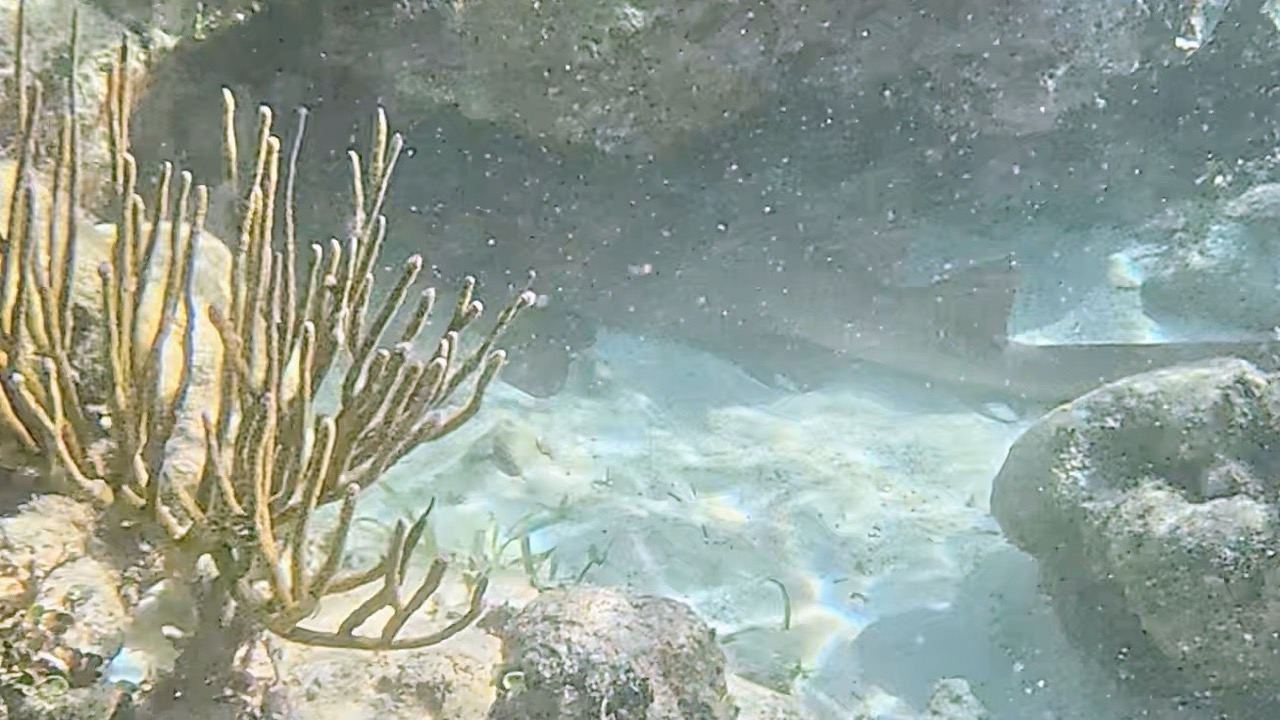
In addition to reef bleaching, in an area filled with littering tourists, we got to play the sad reef game, “Is that a jellyfish or a plastic bag?”

A few days later, we took our second snorkeling tour, this time with almost the entire family. This tour company, Lighthouse Tours, provided a much more thorough pre-trip overview before we even got on the boat.

Since the reef is a protected area, sun protection is extremely limited, with most of the snorkeling companies not even allowing reef-safe sunscreen. As a result, most of us wore sunshirts.


Some of the teenagers, however, chose to disregard the suggestions that they wear a sunshirt, instead choosing to conduct a scientific experiment to discover what would happen when the sun beat down on their northern European backs for an hour or so.

The coral here is unusually shallow for a reef, only 8 to 15 feet deep, which provides an up-close view of the coral and sea life.


As with Atma-ha, our Lighthouse Tours guide had really emphasized staying together. The kids, who you will recall, had recently disregarded adult advice about sun protection, suddenly discovered a profound respect for authority. They received the commandment to stay together as a sacred covenant, swimming so close together that they almost succeeded in defying the laws of physics that two objects cannot occupy the same space at the same time.

Needless to say, the sight of this mass of humanity powered by 16 churning legs caused sea life to scatter in terror.

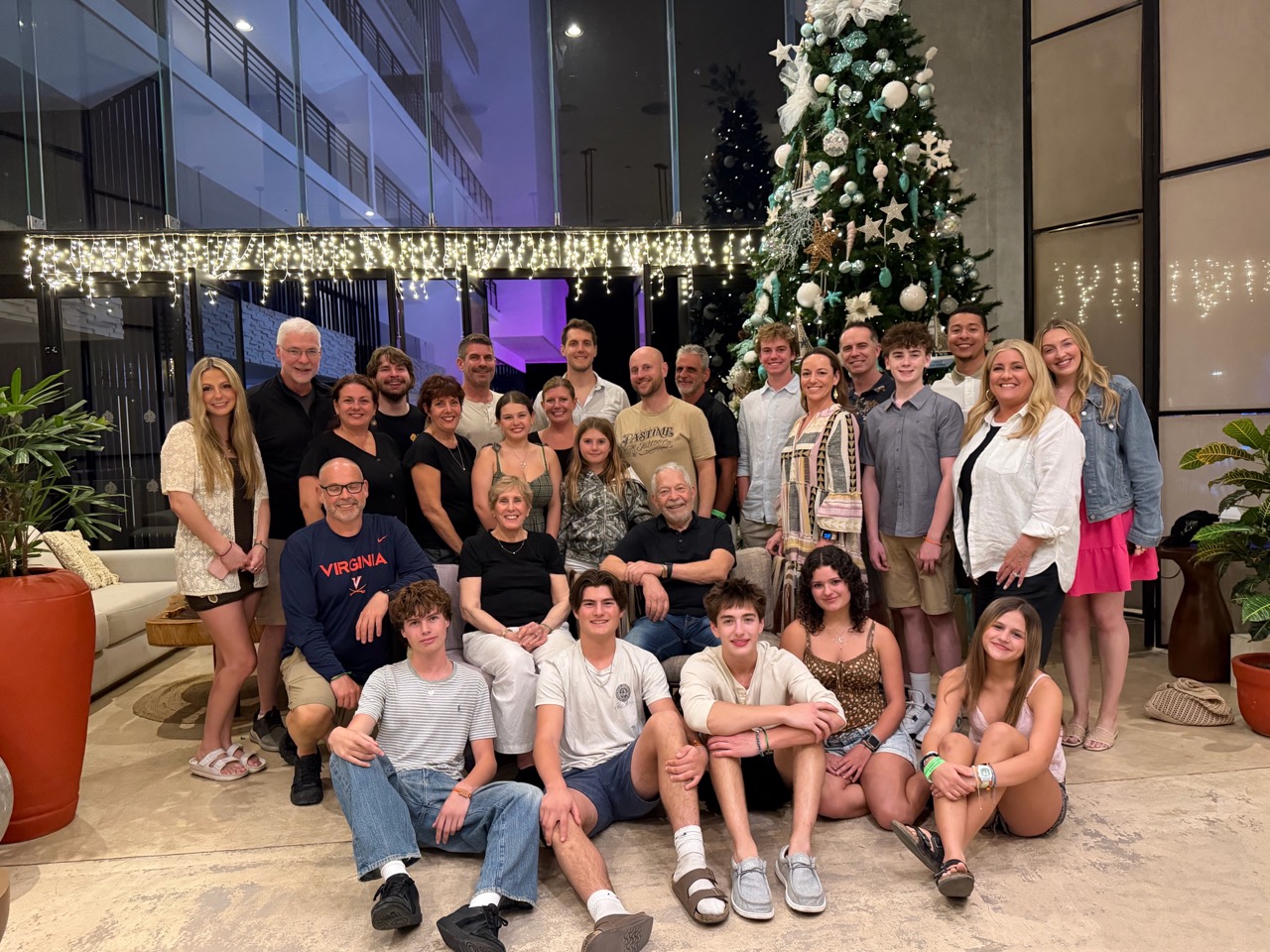
After snorkeling, visiting cenotes, going on catamaran cruises, and visiting Mayan ruins, we had used up all of our time in Puerto Morelos. There was only one thing left to do: take the family picture. Historically, arranging nearly 30 people into a picture where everyone is in the right place and looking in the correct direction had been a source of great joy.

Further eroding the patience people had for organizing the family picture, we were taking the family photo at 10 pm on what was, for most of us, the last day of a fun but exhausting trip. The result was a close race for the title of most visibly impatient family picture participant.

To narrow the field, we had to eliminate some of the competition. The winner, it was decided, couldn’t be Jamie; he found his own way to enjoy the family photo experience.

The winner also can’t be a Yvette, because as she herself noted, her facial expression in the image above was just her resting face.

To be sure, the field of competitors had been weakened by some notable absences. Alex told us that he was going to sleep instead of taking a 10pm picture.

Gaby was sick and couldn’t make it down, so Mark tried to use the recent breakthroughs in generative AI to add her to the picture retroactively. The AI still has some things to learn about photo manipulation, as seen in the liberties taken by ChatGPT in its original rendering of Gaby.

Mark’s efforts to correct ChatGPT and add Gaby again apparently displeased the AI, which responded with a digital “suck it” to the entire family.

Since all of the alt-family members generated by the AI in the image above are smiling, as are Gaby One and Gaby Two, our group photo competition ended in a two-way tie. Once again successfully defending their joint title of most visibly impatient family photo participants and establishing a dynasty of greatness when it comes to impatience during pictures: Rita and Laura.
